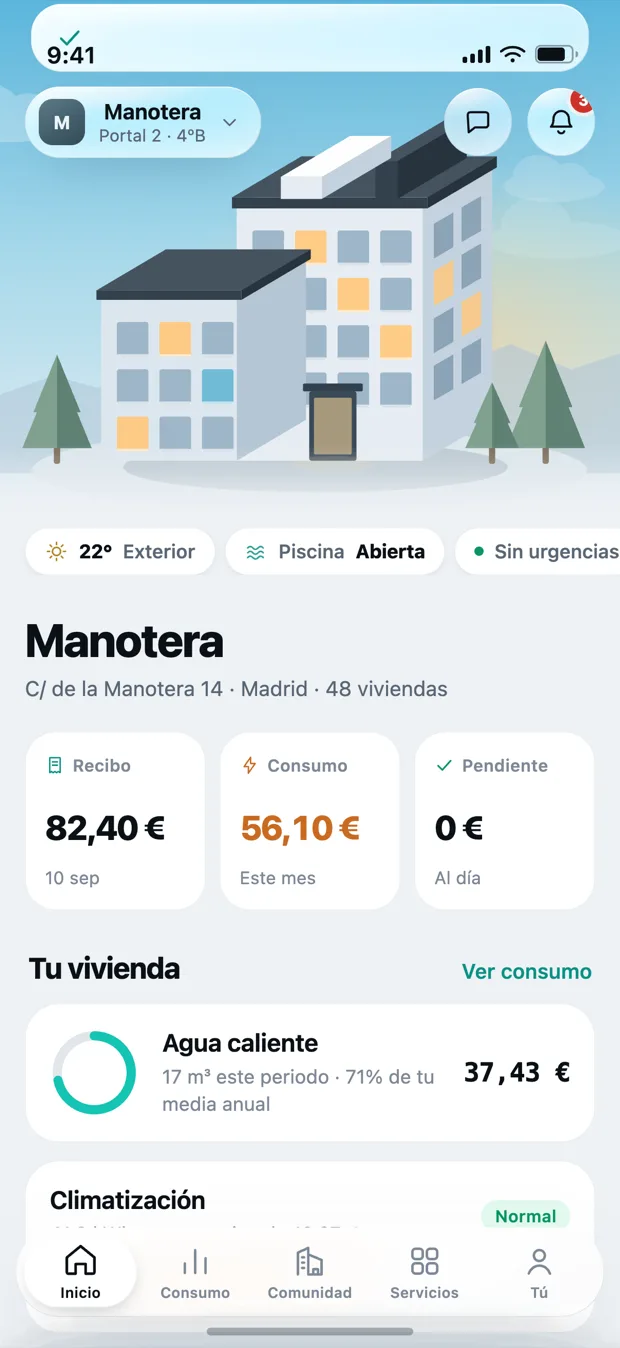
Reported once, and the whole building knows.
The lift, the garage door, the hall light. You report it, and from then on you can see who has it and where it stands, like a parcel.
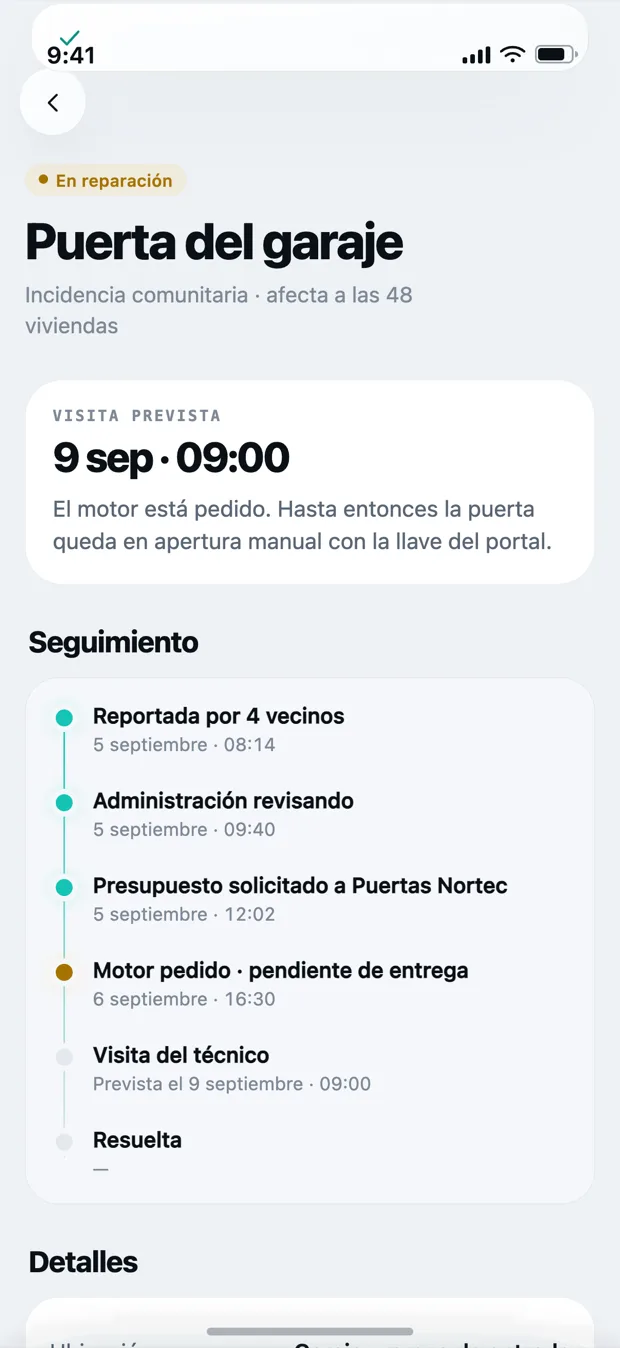
How a fault travels through Kovva
-
1
Somebody reports it
With a photo and two sentences. If a neighbour already reported it, Kovva merges them instead of opening two.
-
2
Management receives it and assigns it
To whichever trade it belongs to. Everyone living in the building sees that change of status.
-
3
The visit is published
Day and company. This is where forty calls asking the same thing stop coming in.
-
4
It is closed with what was done
And it stays in the building’s history, with its invoice if there was one. Next time it happens, everyone knows what was done before.
It stops being your word against nobody’s.
An issue with a status and a date is the difference between “I have said it three times” and knowing exactly what happened.
- The status, kept current: open, in progress, closed.
- The date the trade is visiting, when there is one.
- How many neighbours have reported the same thing.
- What it cost, once the invoice reaches the accounts.
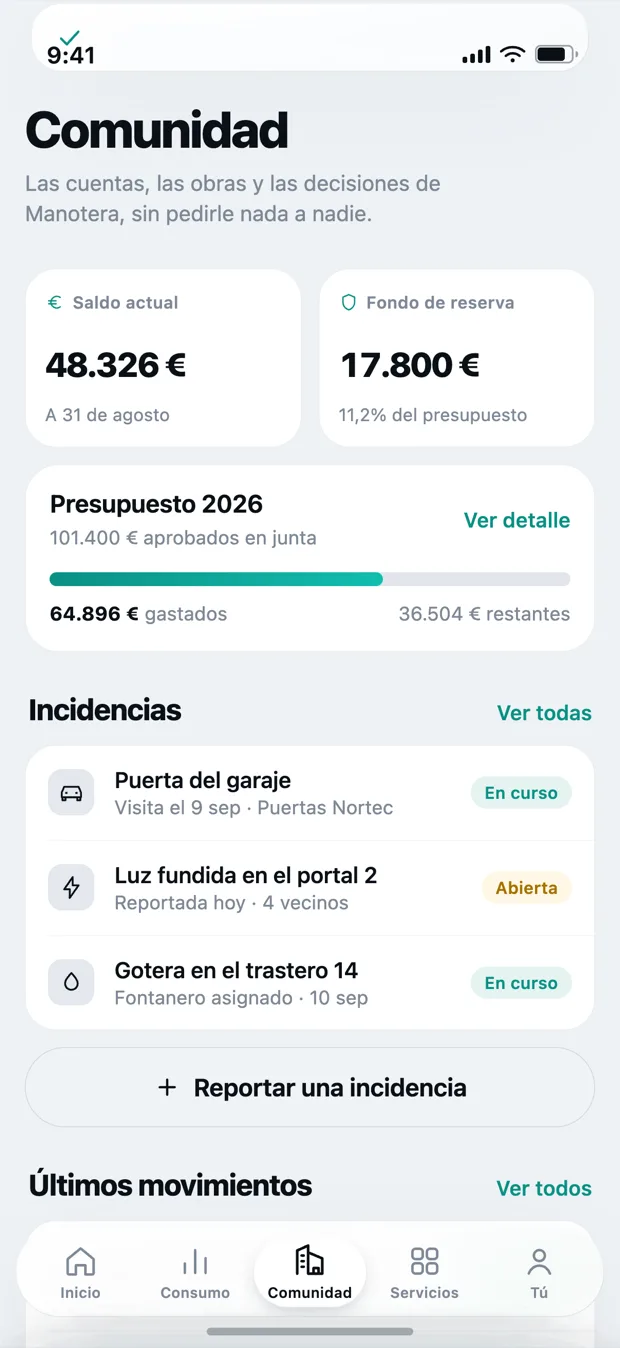
What this takes off each person’s plate
For the neighbour
Knowing whether it needs reporting or is already reported. And not having to be in the group chat to find out.
For the manager
Publishing once instead of answering the same thing forty times on the phone.
For the chair
A dated history for when you have to chase a supplier or justify a cost at the meeting.
About issues
Can I report a fault inside my own home?
Kovva is for shared parts: entrance, lift, garage, installations and common areas. What is inside your flat is yours and does not belong here.
Do neighbours see who reported what?
They see that an issue exists and its status. Who opened it is visible to management, not to the rest of the building.
And emergencies?
An emergency is flagged as such and rises to the top of everyone’s home screen. But an app does not replace the building’s emergency number: if there is water pouring in at three in the morning, you call.
How many of these calls do you get a month?
If you manage buildings, you know that number. Let’s talk.